The Rich History and Evolution of Taekwondo Changmookwan: Exploring the House of Developing Martial Arts
- master243
- Apr 15
- 3 min read
Taekwondo Changmookwan stands as a unique chapter in the story of Taekwondo, representing a school dedicated to the continuous development and transformation of martial arts. The name Changmookwan itself means "house of changing" or "developing martial arts," reflecting a philosophy that embraces evolution rather than rigid tradition. This post explores the origins, growth, and lasting impact of Changmookwan within the broader Taekwondo community.
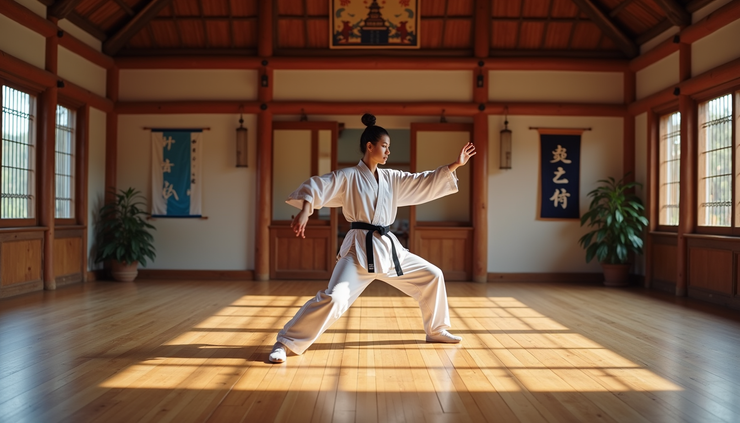
Origins of Changmookwan
Changmookwan emerged in the mid-20th century during a period when Korean martial arts were undergoing significant transformation. After the Japanese occupation of Korea ended in 1945, Korean martial artists sought to revive and unify their native fighting styles. Several kwans, or schools, were established, each with its own approach to martial arts training.
Changmookwan was founded by a group of martial artists who believed that Taekwondo should not remain static. Instead, it should adapt and grow with new techniques, training methods, and philosophies. The founders emphasized innovation while respecting traditional Korean martial arts roots. This mindset set Changmookwan apart from other kwans that focused more on preserving established forms.
Philosophy Behind the Name
The term "Changmookwan" directly translates to "house of changing" or "developing martial arts." This name reflects a commitment to continuous improvement and adaptation. Unlike schools that strictly adhere to fixed patterns, Changmookwan encourages practitioners to explore new techniques and refine their skills in response to changing times and needs.
This philosophy has practical implications:
Encouraging creativity in martial arts practice
Adapting training to modern self-defense scenarios
Incorporating new scientific insights about body mechanics and conditioning
Promoting mental flexibility alongside physical skill
By embracing change, Changmookwan has maintained relevance and appeal for generations of martial artists.
Key Figures in Changmookwan’s Development
Several influential masters shaped Changmookwan’s direction. One notable figure was Master Lee Chang-hoon, who played a pivotal role in formalizing the kwan’s curriculum and spreading its philosophy internationally. He emphasized blending traditional Korean kicking techniques with innovative hand strikes and defensive moves.
Another important contributor was Master Kim Young-woo, who introduced modern training equipment and conditioning programs to improve practitioners’ strength and endurance. His work helped Changmookwan schools stand out for their rigorous physical preparation.
These leaders and others worked together to create a balanced martial art that combined tradition with progress.
Changmookwan’s Role in Taekwondo Unification
In the 1950s and 1960s, efforts to unify the various kwans led to the creation of the Korea Taekwondo Association (KTA). Changmookwan was one of the original kwans that contributed to this process. Its philosophy of development influenced the unified Taekwondo style, which aimed to be both effective and accessible worldwide.
Changmookwan practitioners participated in national demonstrations and competitions, showcasing their evolving techniques. Their openness to change helped shape Taekwondo into a dynamic martial art that could adapt to international sports standards and self-defense needs.
Training Methods and Curriculum
Changmookwan’s training emphasizes a blend of traditional forms (poomsae), sparring (kyorugi), and self-defense techniques. The curriculum evolves regularly to incorporate new insights and feedback from practitioners.
Key features include:
Dynamic kicking techniques that build on traditional Korean styles
Practical hand strikes and blocks adapted for real-world scenarios
Conditioning drills focused on flexibility, speed, and power
Mental training to develop focus, discipline, and adaptability
This approach ensures that students not only learn effective techniques but also develop the mindset to continue growing as martial artists.
Changmookwan Today
Today, Changmookwan schools exist worldwide, continuing the tradition of evolving martial arts. Many instructors emphasize the kwan’s founding principle: martial arts must change to stay relevant. This has led to ongoing experimentation with training methods, competition rules, and self-defense applications.
Changmookwan also promotes cultural education, teaching students about Korean history and the origins of Taekwondo. This connection to heritage enriches the learning experience and fosters respect for the art’s roots.
Why Changmookwan Matters
Changmookwan’s story offers valuable lessons for martial artists and enthusiasts:
Change is essential for growth and survival in martial arts
Balancing tradition and innovation creates a richer practice
A flexible mindset enhances both physical and mental skills
Community and leadership shape the direction of martial arts schools
For anyone interested in Taekwondo, understanding Changmookwan provides insight into how martial arts can evolve while honoring their origins.


Comments