Enhance Your Taekwondo Performance with These Proven Techniques
- master243
- Feb 21
- 4 min read
Updated: Apr 15
Taekwondo: Elevate Your Skills and Performance
Taekwondo demands more than just learning kicks and punches. To truly excel, you need to sharpen your physical skills, mental focus, and strategic thinking. Many practitioners hit a plateau where progress slows, but with the right approach, you can break through and elevate your performance. This post shares practical techniques that help you train smarter, improve faster, and compete stronger.
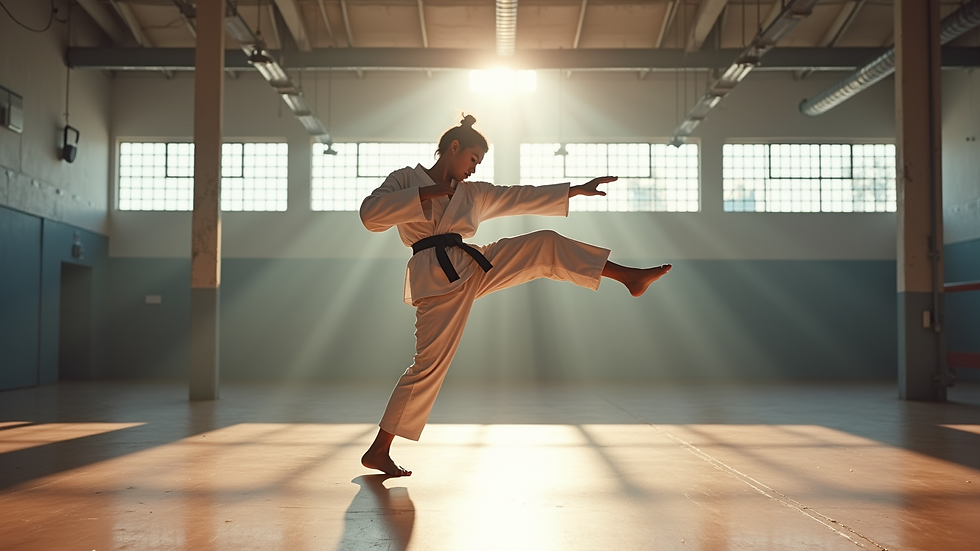
Build Explosive Power with Targeted Strength Training
Power is key in taekwondo. A fast, strong kick or punch can decide a match. To develop explosive power:
Focus on plyometric exercises like jump squats, box jumps, and clap push-ups. These improve fast-twitch muscle fibers essential for quick strikes.
Incorporate resistance training with weights or resistance bands. Squats, deadlifts, and lunges build leg strength, while medicine ball throws enhance upper body power.
Train core muscles with planks, Russian twists, and leg raises. A strong core stabilizes your body during kicks and helps transfer force efficiently.
Try this sample workout twice a week:
3 sets of 10 jump squats
3 sets of 8 medicine ball chest passes
3 sets of 12 lunges per leg
3 sets of 30-second planks
This routine targets the muscles most used in taekwondo, improving your ability to deliver powerful techniques.
Improve Flexibility to Increase Range and Speed
Flexibility allows you to perform high kicks and quick movements without injury. To enhance flexibility:
Stretch daily, focusing on hamstrings, hip flexors, calves, and lower back.
Use dynamic stretches like leg swings and hip circles before training to warm up muscles.
Perform static stretches such as seated forward bends and butterfly stretches after training to lengthen muscles.
Consider yoga or Pilates once a week to improve overall flexibility and balance.
For example, a simple daily routine could include:
10 leg swings front to back per leg
30-second hip flexor stretch per side
30-second seated hamstring stretch per leg
Improved flexibility not only helps with technique but also reduces the risk of strains and sprains.
Master Breathing and Mental Focus for Better Performance
Taekwondo is as much mental as physical. Controlling your breath and focus can improve endurance and reaction time.
Practice deep belly breathing to stay calm and maintain oxygen flow during matches.
Use visualization techniques to mentally rehearse your moves and strategies.
Incorporate mindfulness meditation to sharpen concentration and reduce anxiety.
Develop a pre-competition routine that includes breathing exercises and positive self-talk.
For instance, before sparring, take slow, deep breaths counting to four on the inhale and six on the exhale. This helps lower heart rate and keeps your mind clear.
Refine Technique with Video Analysis and Feedback
Small technical improvements can make a big difference. Use video to analyze your form and identify areas for improvement.
Record your sparring sessions or drills from different angles.
Compare your movements to those of experienced practitioners or instructors.
Look for details like foot placement, hip rotation, and guard position.
Ask your coach or training partners for specific feedback.
Regular review helps you catch bad habits early and reinforces good technique. For example, noticing that your kicking leg drops too soon can lead you to focus on keeping it chambered longer for more power.
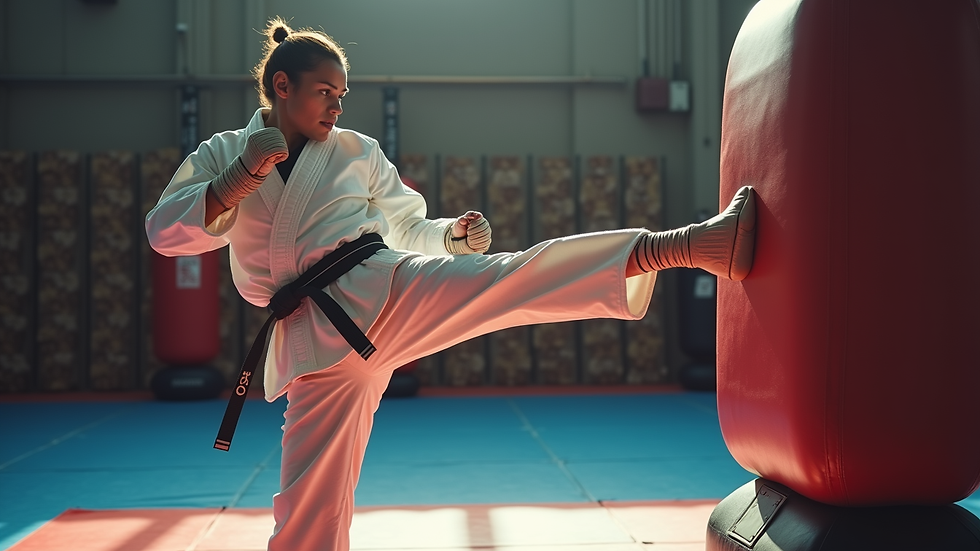
Develop Speed and Agility with Specific Drills
Speed and agility let you strike first and evade attacks. To boost these skills:
Use ladder drills to improve foot speed and coordination.
Practice cone drills to enhance quick changes of direction.
Perform shadow sparring focusing on fast, controlled movements.
Include reaction drills where a partner calls out moves or targets to hit quickly.
Try this agility circuit:
3 rounds of ladder drills (one foot in each square, lateral steps)
3 rounds of cone zig-zags
2 minutes of shadow sparring with fast footwork
Improving speed and agility helps you control the pace of a match and respond effectively to your opponent.
Prioritize Recovery and Injury Prevention
Training hard is essential, but recovery is just as important to maintain performance and avoid setbacks.
Get 7-9 hours of quality sleep each night to allow muscles to repair.
Use foam rolling and massage to reduce muscle tightness.
Stay hydrated and eat a balanced diet rich in protein, healthy fats, and carbohydrates.
Warm up properly before training and cool down afterward.
Address any pain or discomfort early with rest or professional care.
For example, a 10-minute foam rolling session after training can reduce soreness and improve mobility.
Track Progress and Set Realistic Goals
Measuring your progress keeps motivation high and guides your training focus.
Keep a training journal noting drills, techniques practiced, and how you felt.
Record times for agility drills or number of kicks per minute.
Set short-term goals like improving flexibility by a certain degree or mastering a new kick.
Celebrate milestones to stay motivated.
For instance, aim to increase your roundhouse kick height by 5 centimeters over two months through consistent stretching and technique work.
Conclusion: Embrace the Journey of Taekwondo
In conclusion, mastering taekwondo is a journey that encompasses physical, mental, and strategic elements. By focusing on explosive power, flexibility, breathing, technique refinement, speed, agility, recovery, and goal setting, you can elevate your skills significantly. Remember, progress may take time, but with dedication and the right approach, you will see improvement.
By adopting these techniques, you can enhance your training experience and performance in taekwondo. The path to excellence is not just about hard work; it’s about training smart and maintaining a positive mindset. Embrace the challenges, celebrate your victories, and continue to strive for greatness in your martial arts journey.
For more information on authentic Korean martial arts training, visit KORMA-USA.


Comments